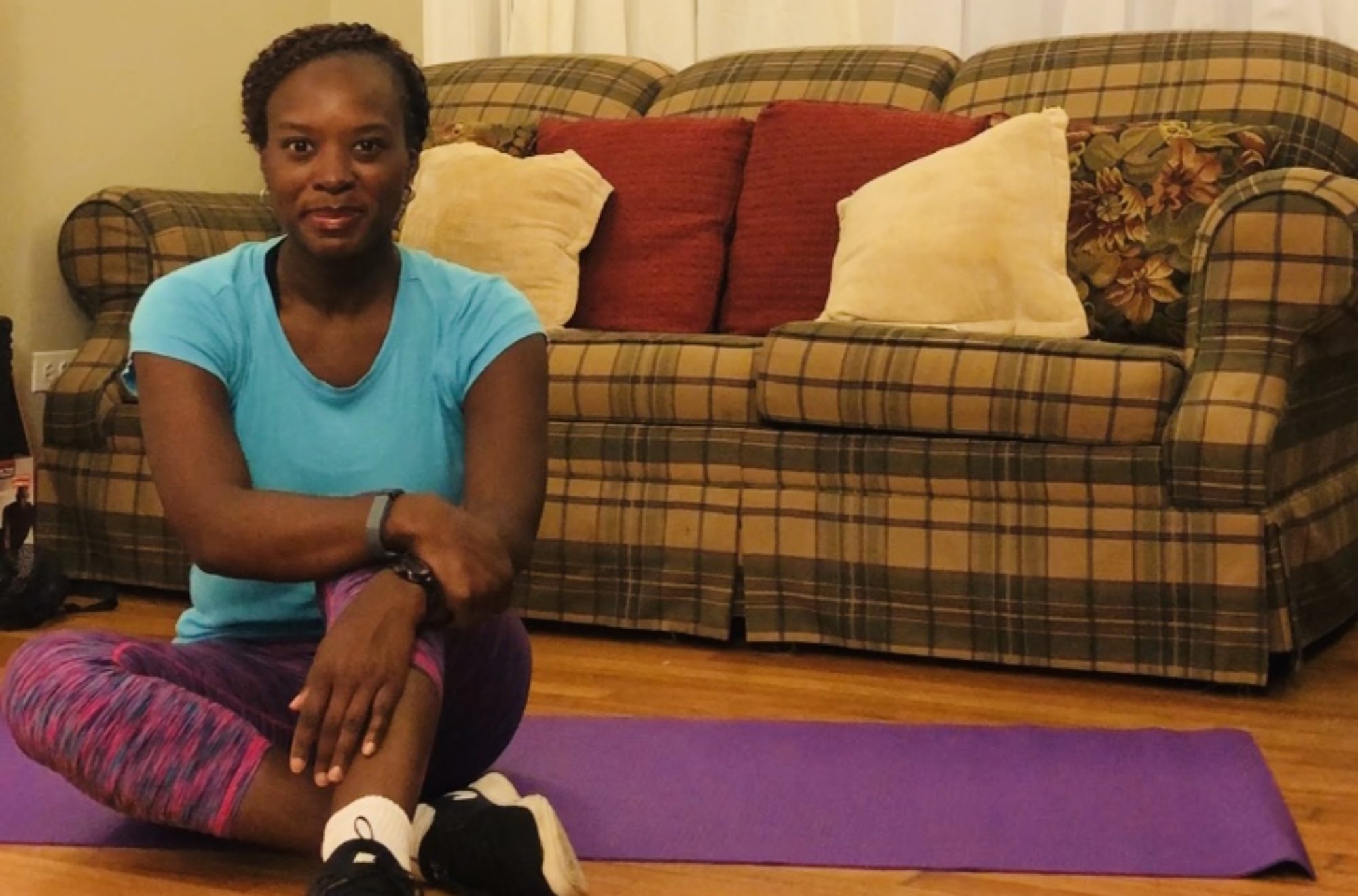


July 23rd is World Sjögren’s Day
About a month ago, I learned that July 23rd is World Sjögren’s (pronouced SHOW-grins) Day. When I realized that it falls on a Wednesday, it occurred to me that it’s the perfect way to relaunch my Weekly Wednesday Weigh-in!
If you’re new here the phrase “Weekly Wednesday Weigh-in” is a double entendre…only without the risqué element. Wednesday is the day of the week where I weigh in, as in give my opinion, on some topic related to health and fitness. It’s also the day that I encourage people to step on the scale to weigh themselves. (Honestly, I think you should weigh yourself every day, but that’s a story for another time.)
It may seem random for me mention that today is World Sjögren’s Day when I haven’t weighed in on any other type of medical condition. But this day focused on awareness of and education about Sjögren’s Disease, an autoimmune disease that many people haven’t heard of.
I figured the best person to talk about World Sjögren’s Day is someone who has Sjögren’s Disease…that would be me.

Learning of My Sjögren’s Diagnosis
I learned of my diagnosis in 2023, but I was already familiar with a host of other autoimmune diseases and conditions. For as long as I can remember, I’ve had what I referred to as popsicle fingers and toes. When I got really cold, I lost circulation in my fingers and toes. The insides of my hands would go from a healthy looking color to white and then purple, and I couldn’t feel them. They were frozen, for lack of a better word. Thawing them out was a really painful process. I thought that happened to everyone, but it was just worse for me since I was really cold-natured.
One day a co-worker noticed my hands and said, “Oh! You have Raynaud’s!” I had no idea what she was talking about, but after doing a little research and getting tested, I learned that I did have Raynaud’s Syndrome, which is an autoimmune condition. When I get cold or have contact with cold objects, my circulatory system goes crazy and tells my brain to stop sending blood to my fingers and toes resulting in those popsicle fingers.
Upon receiving that diagnosis in 2005, my rheumatologist conducted further testing to see if Raynaud’s was a primary or secondary condition. He said that it’s rare that a person simply has one autoimmune condition. I disclosed that I had scalp psoriasis, but he still conducted further testing, and I tested positive for Lupus. Fast forward ten years, I was never diagnosed with full blown Lupus, but my ANA (antinuclear antibody) numbers were extremely high. Despite that super high number, my doctor at the time wasn’t concerned. He said that was just part of who I am.
I relocated to a different state in 2019 and let my new doctor know what the first doctor said about that high number. He accepted it without hesitation. Some time in late 2021, one of my sisters let me know that she has Alopecia, and asked if I’d been diagnosed. I’d always had hair growth issues, but had never been tested. I went to a dermatologist who confirmed that I have Alopecia Areata, but she wanted to know why. She really didn’t like that high ANA result, so she kept testing and discovered that I have Sjogren’s Disease. Believe it or not, I was relieved, because it answered so many questions for me.
What is Sjögren’s Disease?
According to The Sjögren’s Foundation, “Sjögren’s is a systemic autoimmune disease that affects the entire body. Along with symptoms of extensive dryness, other serious complications include profound fatigue, chronic pain, major organ involvement, neuropathies and lymphomas.”
As you may know, autoimmune diseases like Sjögren’s causes the body to attack itself. Though The Sjögren’s Foundation does provide a pretty comprehensive list of symptoms, they preface that section of their website by saying that each person with Sjögren’s experiences the disease differently. Some of the most common experiences and symptoms are featured in the image below. You’ll notice that one of the main symptoms is dryness of the eyes, nose, throat, mouth and skin.
As my doctor from over a decade ago indicated, it’s pretty rare for someone to only have Sjögren’s Disease. In fact The Sjögren’s Foundation has a list of the most common autoimmune diseases that accompany Sjögren’s. That list includes but is not limited to Lupus, Scleroderma, Raynaud’s, Sinusitis and Hypertension.

Sjögren’s Disease and Me
As I mentioned earlier, when I learned of my Sjögren’s diagnosis a few years ago, I was relieved. That may seem strange to some people, especially after they learn what it is. However, it helped me understand what I was going through.
Prior to my diagnosis, I was beginning to feel like my body was falling apart. I had little very little energy, and I was exhausted all the time, but I couldn’t sleep very well. I had sinusitis so much that when I went to the doctor, I told them what was wrong and let them know what. My joints were hurting. I couldn’t run like a used. I’ve actually fallen a few times while teaching fitness classes. I would have nosebleeds at the most random times. There was pain, weakness and tingly sensations on left side of my body. I thought I was going crazy. But I wasn’t. I just had an autoimmune disease.
I also realized that my digestive issues, high blood pressure, Raynaud’s and nearly all of the other “random” things I had aren’t random. They are all tied to Sjögren’s Disease.

Living With an Invisible Disability
As someone who is living with an invisible disability, I’m learning to take care of myself and I’m also learning to advocate for myself.
I know that I don’t look like a person with a cluster of autoimmune diseases. In fact, my current doctor frequently says that my physical appearance doesn’t match my bloodwork. That’s how autoimmune diseases work. Many of us with Sjögren’s Disease suffer in silence because people don’t understand what we’re going through and we don’t look sick.
I want to be clear in stating that my symptoms haven’t changed, in fact, they’re a bit worse. I still have left side weakness. I’m exhausted most of the time. Something almost always hurts. I still have nosebleeds on occasion. It takes my body longer to recover after intense exercise, so I had to cut my fitness teaching schedule down from eight classes a week to three. The major difference is what I do. I’ve learned how to manage my symptoms.
There is no cure for Sjögren’s Disease, but there are certain things that I do to help with my symptoms.
- I drink a TON of water to stay hydrate and help alleviate the dryness in my body.
- I use eye drops and nasal drops, probably for obvious reasons.
- I have a humidifier that I really need to use more often. I also have a small one for travelling.
- I stretch every single day to keep my muscles and joints flexible.
- I tend to wear my glasses way more than I wear my contacts because the contacts dry out my eyes.
- I do at least 30 minutes of moderate to vigorous physical activity almost every day because it’s good for my heart, and it help me fight fatigue.
- I consume far less caffeine, meat, sugar, and carbohydrates than I used to because I noticed that my body feels better and performs better when I use those things sparingly.
- Most importantly, I listen to my body and rest when it tells me to.
Your Next Steps
Today is World Sjögren’s Day! It’s a day that’s devoted to bring awareness to an autoimmune disease that many don’t know about. You might not have Sjögren’s Disease, but now you know someone who does.
Please help me spread awareness by sharing this post.

Hopping on the Scale! Don’t forget to hop on the scale and see where you are this week. Remember: it’s just a number. Our weight fluctuates, so if it goes up, down or nowhere, we’re still AWESOME!
Follow Get Fit with Charity on Facebook, Pinterest and Instagram!